
Georgia's residential real estate market reached $4.3 billion in 2024 — its fifth consecutive year of growth — with foreign buyers accounting for more than 17% of all transactions. The investment residence permit threshold rose from $100,000 to $150,000 in March 2026, a signal of where the market is heading. Five consecutive years of market growth, full foreign ownership rights, and entry prices that still sit well below comparable destinations.
Why international capital is moving into Georgia
Georgia's economy grew by 9.4% in 2024, one of the highest rates in Europe and Central Asia. The IMF and Asian Development Bank expect growth of 5–6% by 2026, which is lower than recent peaks but still strong compared to most neighbouring countries. Over the past four years, the economy has grown by an average of 9.2% annually, driven by domestic consumption, services, and a tech sector that expanded quickly after 2022.
Tourism reached a record 7.8 million visits in 2025, with an average annual growth of 23.9% over the past six years. This supports rental demand in both coastal and city markets and brings in buyers from outside the country. Foreign direct investment reached $533.2 million in Q3 2025 alone, nearly double compared to the same period the year before. Georgia also has free trade agreements with the EU, China, the UAE, and CIS countries, giving access to a combined market of 2.3 billion people.
.jpeg)
In January 2025, Eagle Hills — an Abu Dhabi-based developer chaired by Mohamed Alabbar — signed agreements for two large-scale projects in Tbilisi and Batumi, with a total investment of $6.5 billion. The Georgian state holds a 33% stake. A commitment of this scale from a developer of that profile tends to attract broader international attention to the market.
The property market recorded 78,500 transactions in 2025, up 6% year-on-year, according to TBC Capital. Of these, 49,200 were in the secondary market and 29,300 in the primary market, showing that activity is expanding beyond off-plan properties into existing homes. TBC Capital expects price growth of around 3.2% and overall market growth of 4.5% in 2026, broadly in line with the wider economy.
Georgia has allowed unrestricted foreign property ownership since the early 2000s. There are no purchase permits, nationality restrictions, minimum holding periods, or designated zones, so foreign buyers can access the full market under the same conditions as local buyers. The only exception is agricultural land.
Where investors are looking
Georgia offers different investment options depending on income goals, risk level, and how involved an owner wants to be. Tbilisi and Batumi are the main markets, with the highest transaction activity and the strongest demand from foreign buyers. Outside these cities, mountain resorts and smaller regional areas tend to attract investors with longer-term strategies or an interest in seasonal properties.
%20(1).jpg)
Tbilisi
Capital city · Year-round rental marketTbilisi has a stable, year-round rental market supported by professionals, expats, students, and a growing tech sector. Demand stays consistent throughout the year, without strong seasonal drops, which makes income more predictable compared to resort markets. New-build prices averaged $1,312 per sqm in 2025, up 4.1% year-on-year, and have increased by around 57% since 2020.
Growth has been driven largely by the secondary market, where resale transactions are now more active than new-build sales, showing a more mature and balanced market. Saburtalo is the most active district, popular with IT professionals and students. Vake and Mtatsminda are more established areas, often chosen for stability and tenant quality. For higher yields, outer districts like Didi Digomi can exceed 10% gross returns. Across the city, average gross yield reached 7.42% in Q1 2026, ranging from about 5% in prime areas to over 10% in developing locations.
.jpg)
Batumi
Black Sea coast · Tourism-driven marketBatumi is Georgia's main resort city, with demand driven largely by tourism. Foreign buyers accounted for 52% of developer sales in 2025, showing strong international interest and supporting resale activity. New-build turnkey apartments averaged $1,865 per sqm at the end of 2025, up 9.4% year-on-year, with total market volume exceeding $1.3 billion for the first time. Demand for new builds continues to grow faster than in Tbilisi, mainly due to short-term rental demand from international investors.
Average gross yield was around 7.4% in late 2025. Yields have slightly decreased as property prices rose faster than rental rates, which stayed relatively stable during the year. The market remains seasonal, with most short-term rental income concentrated in July and August, so investors looking for steady income often focus on central residential areas or long-term rentals. At a national level, resale transactions exceeded new-build sales for the first time in 2025, a sign that Georgia's property market as a whole is becoming more established.
Other markets worth knowing
Georgia's investment landscape goes beyond its two main cities. Mountain resorts and smaller regional centres attract investors who are looking at longer-term growth or lower entry prices.
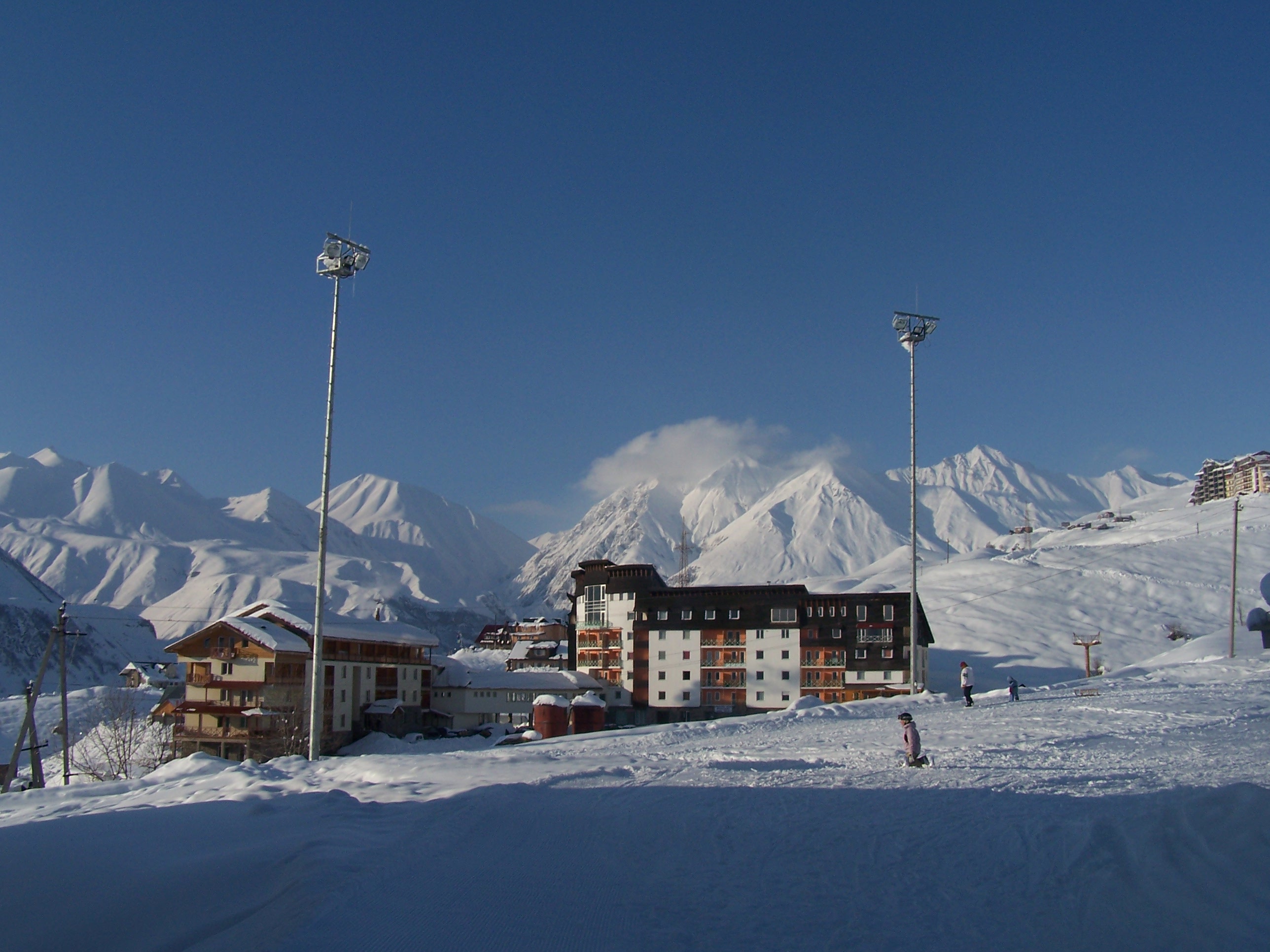
Gudauri, located at 2,200 metres, is Georgia's main ski destination, with a season running from November to April and increasing activity during the summer. Bakuriani sits at a lower altitude and is more family-oriented, with a longer track record as a resort. Near Tbilisi National Park, Archi is developing the Le Méridien Sioni Lake Resort & Spa at around 1,100 metres, positioned as a year-round lakeside destination rather than a purely seasonal ski property.
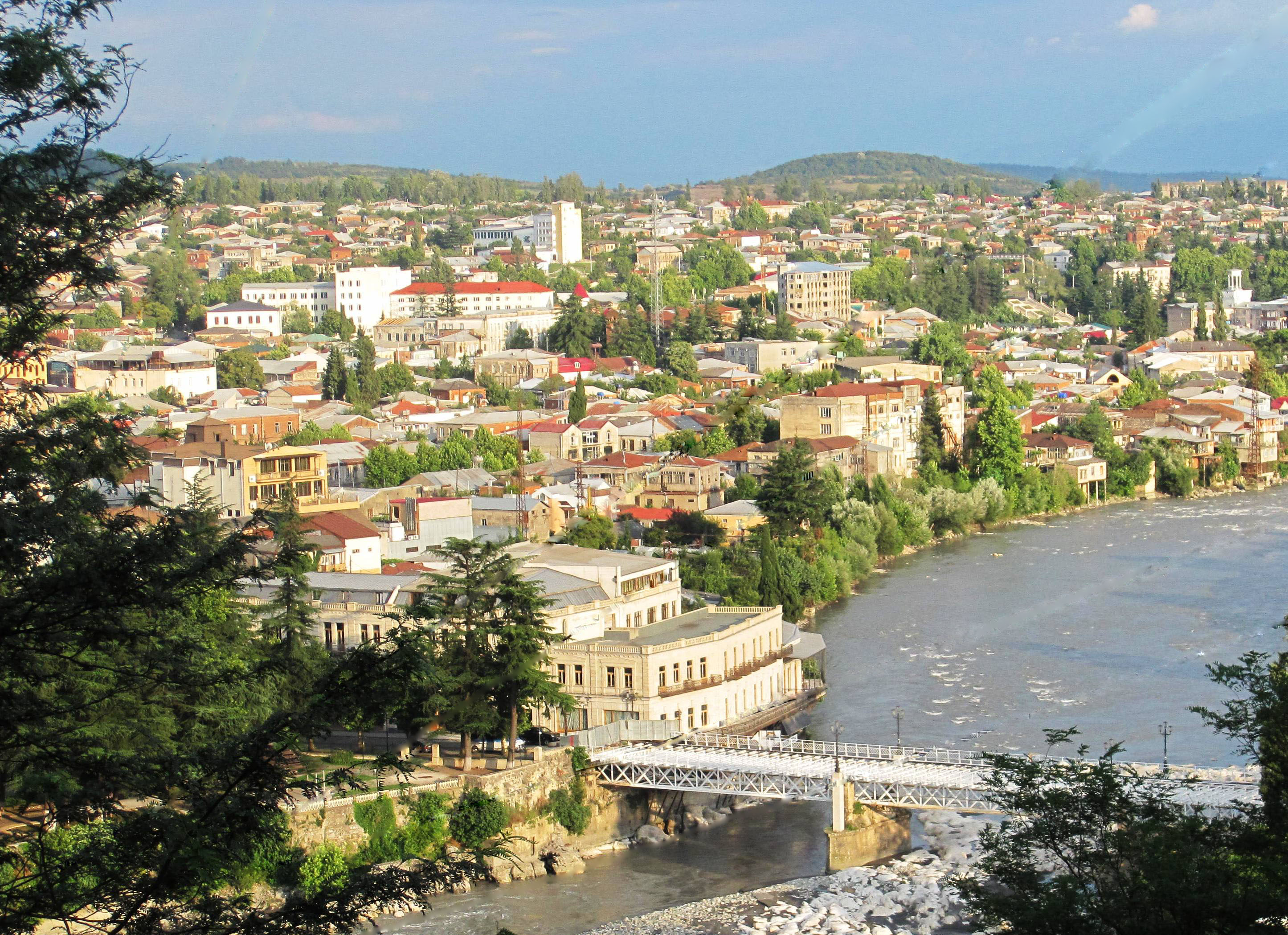
Kutaisi is Georgia's third-largest city and the country's parliamentary seat. Its international airport serves as a base for low-cost carrier Wizz Air, with a growing number of European connections. Property transactions increased by around 12% between 2024 and 2025. With entry prices starting from about $500 per sqm, it is the most affordable major market in Georgia. Returns here are mainly driven by long-term capital appreciation as infrastructure continues to develop.

Transaction costs and tax structure
Transaction costs in Georgia are relatively low, typically around 3–5% in total, including agent commission, legal and notary fees, and registration. There is no transfer tax or stamp duty. Compared to markets like Dubai, where a 4% fee applies, this can mean savings of around $5,000–8,000 on a $200,000 purchase. Georgia also uses a territorial tax system, where residents are taxed only on income generated within the country, making it a practical option for investors holding assets in different locations.
Buying as a foreign national
Buying property in Georgia is straightforward for international buyers. There are no government approvals, no nationality restrictions, no minimum purchase amounts, and no required holding period before resale. Ownership is registered through the National Agency of Public Registry (NAPR), which has used a blockchain-based system since 2016, allowing records to be verified online. Since early 2025, purchases can also be completed remotely through a Smart Contract system, where contracts are signed digitally and ownership is registered at the same time.
Select property and agree terms
Foreign buyers can purchase residential and commercial property across the market without pre-approval. The only restriction applies to agricultural land.
Legal and notary review
A local lawyer or notary reviews the title, prepares the contract, and provides translation if needed. This can be done remotely through Power of Attorney. Typical cost ranges from $200 to $500.
Sign and pay
Contracts can be signed digitally through the NAPR system, with payment and registration completed at the same time. In-person signing is also possible. Transactions are usually done in USD, and many developers offer interest-free instalment plans for off-plan properties over 2–5 years.
Title registration
Ownership is registered electronically with NAPR and usually completed within 1–4 business days. Fees range from 50 to 200 GEL (around $18–75). Buyers receive a digital ownership document that is internationally recognised and can be verified online.
Residency through property ownership
Georgia offers a residence permit based on property ownership, with updated investment thresholds introduced from March 1, 2026. The increase from the previous $100,000 minimum reflects a shift toward attracting longer-term investors. In practice, this aligns with current market prices, as many new-build properties in Tbilisi and Batumi already exceed $150,000. Investors can combine multiple properties to meet the required threshold.
- Full right to live and work in Georgia
- No minimum stay requirement
- Spouse and minor children included
- Multiple properties can be combined
- Renewed annually while property is held
- 5-year permit from the outset
- Permanent residency option after 6 years
- Spouse and children included at no additional investment
- Multiple properties can be combined
- Valid while qualifying property is held
Valuation is based on an independent appraisal by a licensed assessor, rather than the contract price. There are no language requirements, no points-based system, and no minimum number of days that must be spent in Georgia. Residency can also lead to tax residency, giving access to the territorial tax system, where income earned outside Georgia is not taxed locally.
Georgia and Dubai — a market comparison
For buyers familiar with Dubai, the most noticeable difference is the lower entry cost, although ownership rules, transaction costs, and residency terms are also important when comparing the two markets.
Most property transactions in Georgia are priced and settled in USD, which reduces direct currency risk when buying. The Georgian Lari is mainly used for local expenses and rental income. Georgia is also moving through the EU accession process, and its political environment continues to evolve. These are factors worth watching for long-term investors, although they have not had a clear impact on transaction volumes or pricing so far.
Frequently Asked Questions
Common questions from international buyers considering Georgia.
Can foreigners buy property in Georgia?
Yes. Foreign nationals can buy, own, and sell residential and commercial property under the same conditions as Georgian citizens. There are no permits, no nationality restrictions, and no minimum purchase amount. The only exception is agricultural land. Ownership is registered through the National Agency of Public Registry (NAPR) and can be verified online.
What are the total costs of buying property in Georgia?
Total costs are typically around 3–5%. There is no transfer tax or stamp duty. Main costs include agent commission (usually 3–5%, often shared), legal and notary fees ($200–500), and registration fees (50–200 GEL, around $18–75). Registration usually takes 1–4 business days.
Can I complete a purchase without travelling to Georgia?
Yes. The process can be completed remotely through NAPR's Smart Contract system, with digital signing and registration done at the same time. A local lawyer can also act on your behalf under Power of Attorney.
How do off-plan payment plans work in Georgia?
Developers usually offer instalment plans over 2–5 years, with a deposit and staged payments. These plans are typically interest-free. Payments are made in USD through international bank transfer.
What rental yields can I expect in Georgia?
In Tbilisi, average gross yields are around 7.42%, ranging from about 5% in central areas to over 10% in outer districts. In Batumi, yields are also around 7.4%, with stronger returns during the summer season. Net yields are usually 1.5–2% lower after costs.
What taxes do property owners pay in Georgia?
Rental income is taxed at 5%. There is no capital gains tax if the property is held for more than two years. There are no transfer or stamp duties. Annual property tax ranges from 0% to 1%, depending on value and location. There is no inheritance tax, and foreign income is not taxed in Georgia.
Is Tbilisi or Batumi better for investment?
Tbilisi offers stable, year-round rental demand and more predictable income, supported by professionals, students, and expats. Batumi is driven by tourism, with higher returns during peak season but more seasonality — most short-term rental income concentrates in July and August. Investors looking for steady income often choose Tbilisi, while those targeting short-term rental returns tend to prefer Batumi.
Can I get Georgia residency by buying property?
Yes. From March 1, 2026, a $150,000 property qualifies for a renewable 1-year residence permit. A $300,000 investment qualifies for a 5-year permit, with the option to apply for permanent residency after 6 years. Multiple properties can be combined to meet the requirement, and family members are included. There is no minimum stay requirement and no language test.
Do I need to live in Georgia to maintain the residence permit?
No. There is no minimum stay requirement. The permit remains valid as long as the property is held and meets the value threshold. One visit is required at the start for biometric registration.