
Muscat, Oman
Oman's capital and its largest real estate market — a coastal city between the Gulf of Oman and the Hajar Mountains, with ITC communities open to foreign buyers.
Projects in Muscat
About Muscat

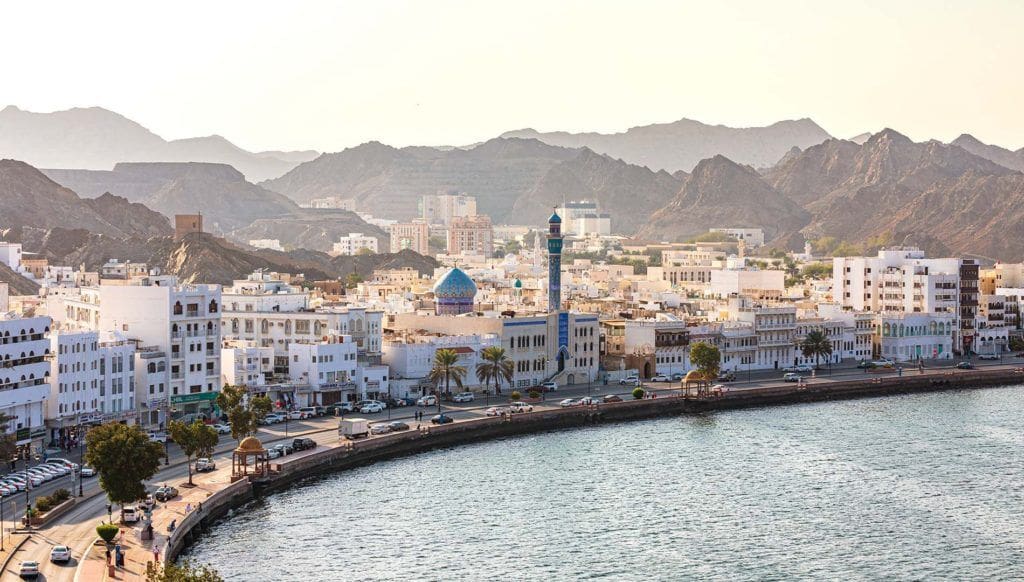
Muscat is the capital of Oman and the country’s main urban and commercial centre. It stretches for about 90 km along the Gulf of Oman coastline, with the Al Hajar Mountains on the inland side. The city is made up of connected districts, each with its own character, spread along Sultan Qaboos Road.
At the end of 2025, Muscat Governorate had a population of around 1.53 million. Expatriates account for about 61%, with strong communities in areas such as Al Khuwair, Madinat Sultan Qaboos, Qurum, and Al Mouj. This supports steady demand for well-located rental properties.
Muscat is known for its calm environment and low crime levels, and it is often ranked among the most liveable cities in the Gulf. Oman’s political stability and neutral foreign policy add to its appeal as a safe base for both residents and investors.
Property Prices in Muscat
Muscat’s residential market has recovered strongly after a correction phase in 2023–2024. Prices increased through 2025, with apartments rising by around 22% annually and villas by about 16%. The strongest growth has been in Al Mouj and Muscat Hills, where values rose by roughly 18–25% over the same period.
Foreign buyers are mainly limited to ITC communities. These properties typically trade at a 40–60% premium compared to non-ITC areas. The higher pricing reflects freehold ownership, managed infrastructure, and the residency benefit linked to property purchase.
| Community / type | Price per sqm (OMR) | Price per sqm (USD approx.) | Gross yield (est.) |
| Al Mouj — apartments | OMR 2,200–3,000 | ~USD 5,700–7,800 | 4–6% |
| Al Mouj — waterfront villas | OMR 2,800–3,600+ | ~USD 7,300–9,400+ | — |
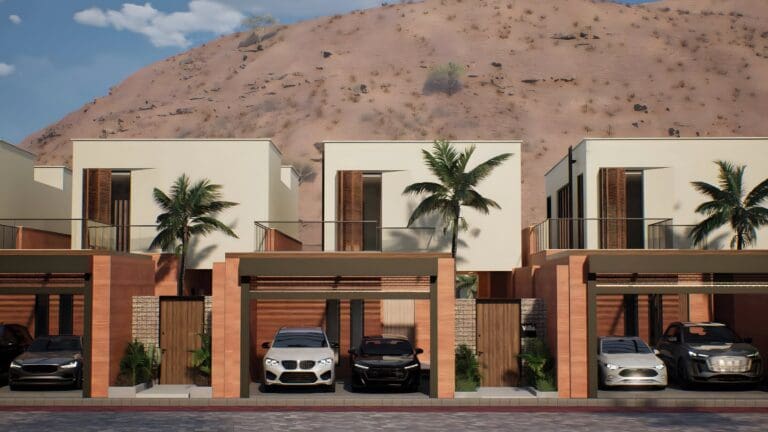
| AIDA / Yiti — villas (off-plan) | OMR 550–900 | ~USD 1,430–2,340 | 7–9% (est.) |
| Muscat Hills — apartments | OMR 400–700 | ~USD 1,040–1,820 | 5–7% |
| Muscat Bay — apartments & villas | OMR 650–1,100 | ~USD 1,690–2,860 | 5–7% |
Indicative ranges based on ITC listing data and market reports. 1 OMR ≈ USD 2.60 (pegged rate). Prices vary by unit specification, floor, view, and handover status.
*The price is valid for 2026
ITC Communities in Muscat
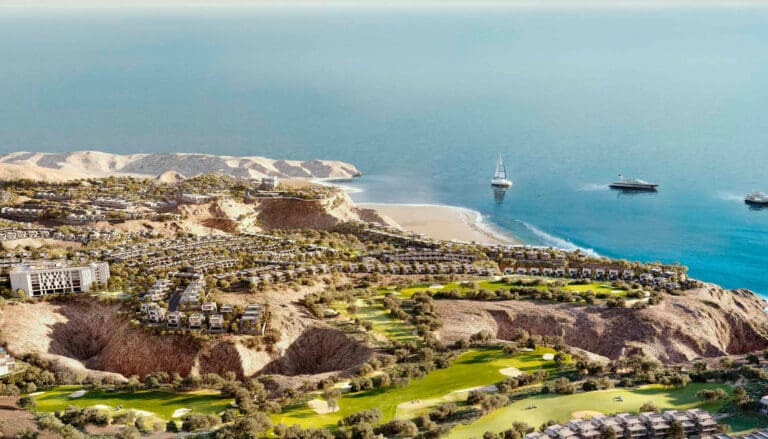
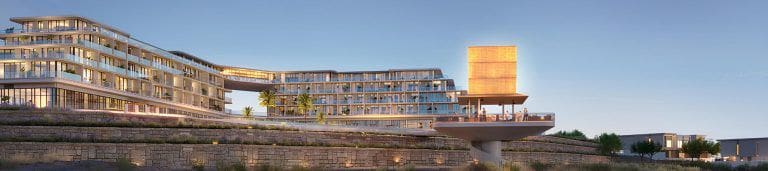
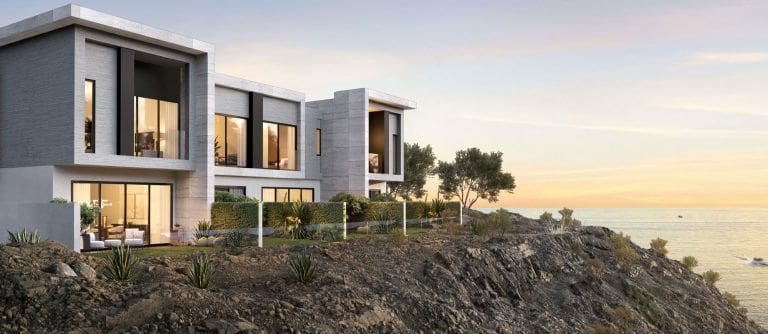
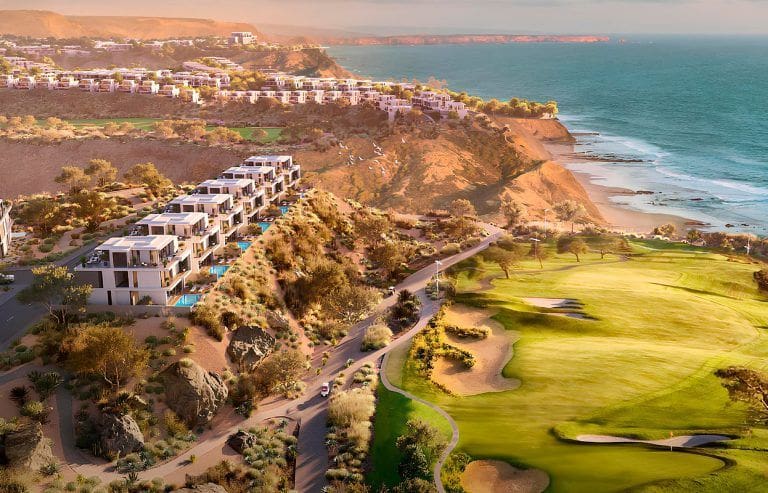
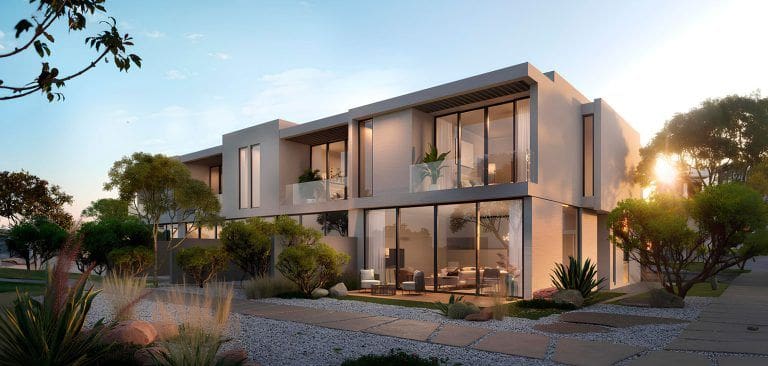
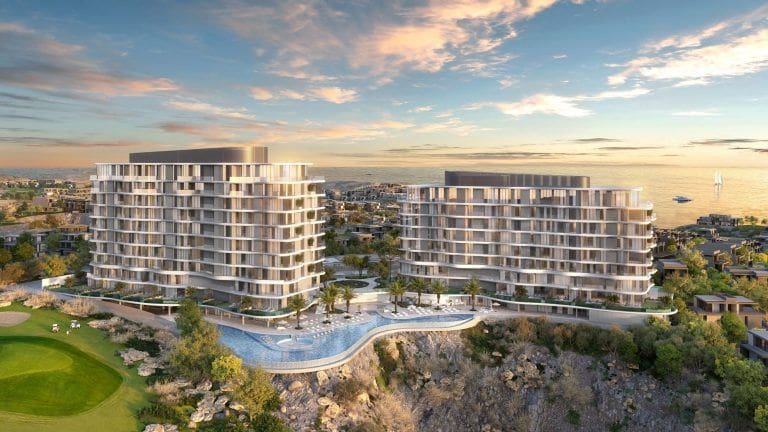
Foreign buyers in Muscat can purchase property only in approved Integrated Tourism Complexes (ITCs). Each ITC has its own setting and investment profile, ranging from established waterfront areas like Al Mouj to emerging cliffside developments such as AIDA.


Buying Property in Muscat as a Foreign National
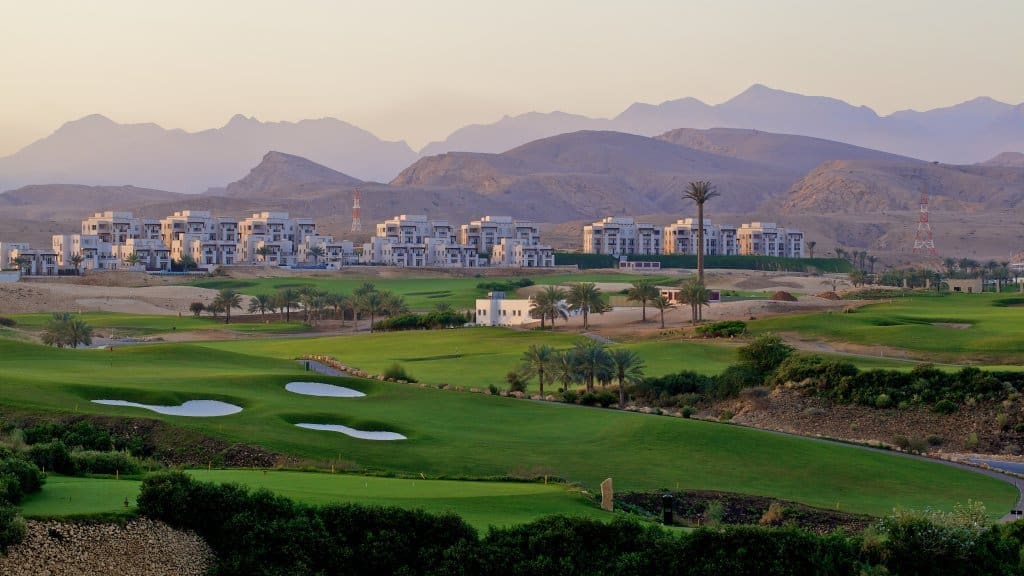
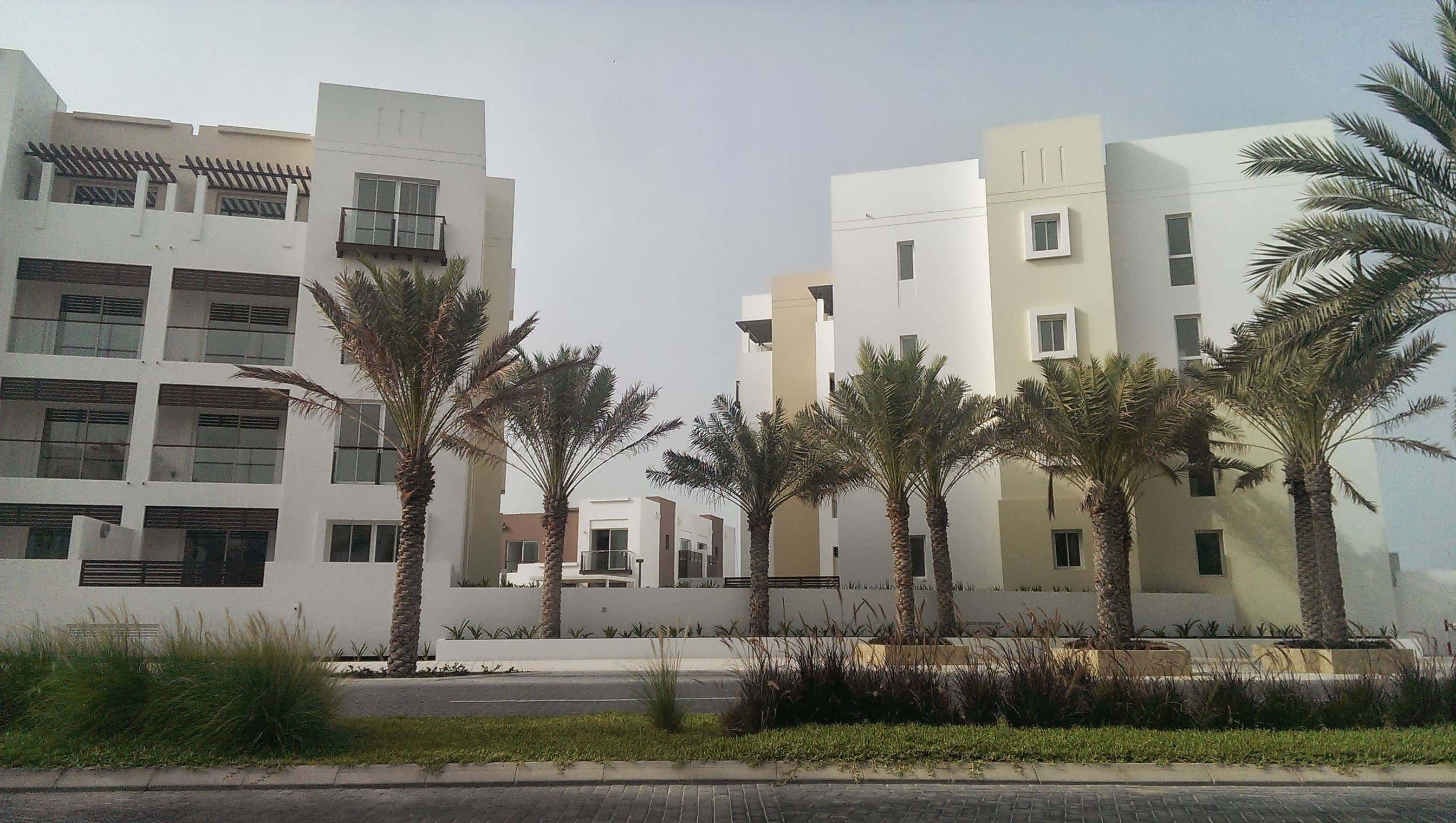
Under Royal Decree No. 12/2006, foreign nationals can only buy freehold property in Oman within approved Integrated Tourism Complexes (ITCs). In Muscat, these include Al Mouj, AIDA/Yiti, Muscat Hills, and Muscat Bay. All ownership is registered through the Amlak system, with full rights to sell, rent, or transfer the property to heirs.
Transaction costs are relatively low compared to other Gulf markets. The main fee for foreign buyers is a 3% property transfer fee paid at registration. There is no annual property tax, no capital gains tax, and no personal income tax on rental income.
Buying in any approved ITC grants residency for the owner and immediate family for as long as the property is held. There is no minimum investment requirement — it applies to any ITC purchase, regardless of price.
Oman’s Golden Visa, relaunched in September 2025, offers a separate 10-year residency option for investments of OMR 200,000 or more, including property, shares, or government bonds.
Living in Muscat
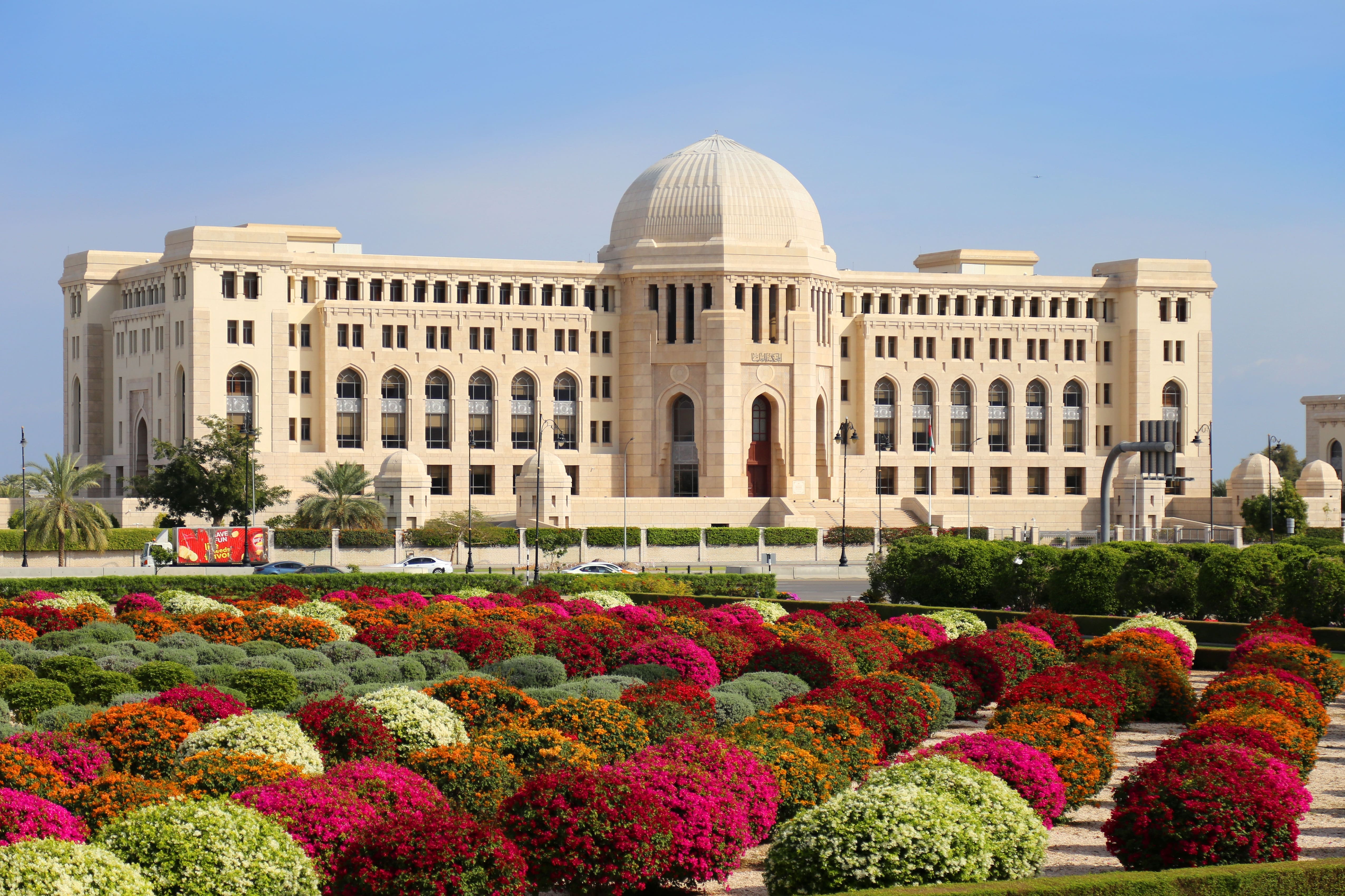
Muscat is a low-density, spread-out city with a relaxed pace of life. High-rise buildings are restricted across the governorate, which gives the skyline an open feel and a more spacious urban environment.
The sea is close to most residential areas, usually within 10–15 minutes. The Muttrah Corniche offers a long waterfront promenade connecting the historic port with the old city. Inland, the Hajar Mountains are less than an hour from central districts and form a dramatic natural backdrop.
Key landmarks and attractions include:
Connectivity
Muscat International Airport (MCT) is the country’s main air hub, handling around 13.2 million passengers in 2025. As of mid-2026, it connects to 83 destinations across 26 airlines. Oman Air is expanding its network with new non-stop routes to Singapore, Tashkent, Sochi, and Kigali.
Within the city, transport is mainly car-based, with Sultan Qaboos Road running along the coastline and linking most key districts. Road infrastructure continues to expand, with the Muscat Expressway widening project approved and expected to start in Q3 2026. The Muscat Metro is in advanced planning stages, with an official announcement expected in 2026. Longer-term regional connectivity will also improve through the Hafeet Rail project — a 238 km Oman–UAE railway that is around 40% complete and will connect Sohar with Abu Dhabi.

FAQ
Yes, but only in approved Integrated Tourism Complexes (ITCs). In Muscat, these include Al Mouj, AIDA/Yiti, Muscat Hills, and Muscat Bay. Ownership is registered through the Amlak system with full rights to sell, rent, or inherit. Property outside ITCs is not available to foreign buyers.
Prices depend on location. Al Mouj waterfront units range from about OMR 2,200–3,600 per sqm. Muscat Hills apartments start around OMR 65,000. Off-plan villas in AIDA begin from roughly AED 870,000. The average home price in Muscat is about OMR 240,000, with ITC properties usually priced higher.
ITC communities generally offer gross yields of 5–8%. Al Mouj is typically around 4–6%, supported by strong occupancy and stable expat demand. Central expat areas like Al Khuwair and Qurum can reach 6–9% but are not available for foreign ownership. AIDA is expected to reach 7–9% once fully operational.
Yes, but the duration depends on the property's value. Purchases below OMR 200,000 grant a renewable 2-year residency for the owner and immediate family, tied to continued ownership. Oman's Golden Residency programme, relaunched in September 2025, offers a separate 10-year residency for investments of OMR 200,000 or more — through property as well as routes like government bonds, equities, and fixed deposits.
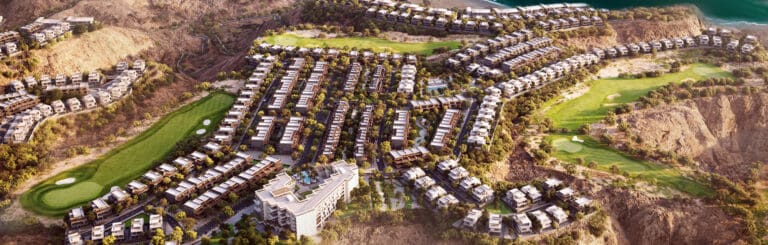
Al Mouj is a fully developed waterfront community with a marina, golf course, hotels, and strong rental demand. AIDA is an off-plan cliffside development in Yiti with lower entry prices and higher projected returns, but a longer development timeline. They target different types of buyers.
The main cost is a 3% property transfer fee. There is no property tax, capital gains tax, or income tax on rent. Service charges typically range from OMR 500–2,000 per year depending on the property. If financing is used, mortgage registration fees are capped at 0.5%.
Yes. Purchases can be completed remotely using a power of attorney. Documents are attested through the Omani embassy, and ownership is registered digitally via Amlak. The process usually takes 1–2 weeks after submission.
Data sources: National Centre for Statistics and Information (NCSI) Oman — Muscat Governorate Population December 2025; Residential Property Price Index Q3 2025 · Cavendish Maxwell — Oman Real Estate Market Performance (May 2025) · Sands of Wealth — Muscat Real Estate Market Analysis (2026) · Trowers & Hamlins — Oman Golden Visa (September 2025). Last reviewed June 2026.
Metropolitan Premium Properties
-
 [email protected]
-
+971 4 428 6151
-
36th-38th Floor, Al Salam Tecom Tower,
Internet City, Dubai, UAE


Get A Free Consultation
Ready for your new home?Leave a Request
Popular Searches in the UAE
Our newsletter
Sign up for our weekly newsletter for market updates!