
Dubai and Saudi Arabia are both tax-free real estate markets in 2026, but they sit at very different stages. Dubai is a mature, long-established market with deep liquidity and tested processes. Saudi Arabia only opened to foreign buyers in 2026, offering lower entry prices and early-cycle positioning, while its resale and transaction infrastructure is still developing.
Two markets, different starting points
Dubai opened its property market to foreign buyers in 2002 and has spent more than two decades building a mature real estate sector. Today, buyers have access to established freehold areas, a large resale market, financing options, and a long history of transactions.
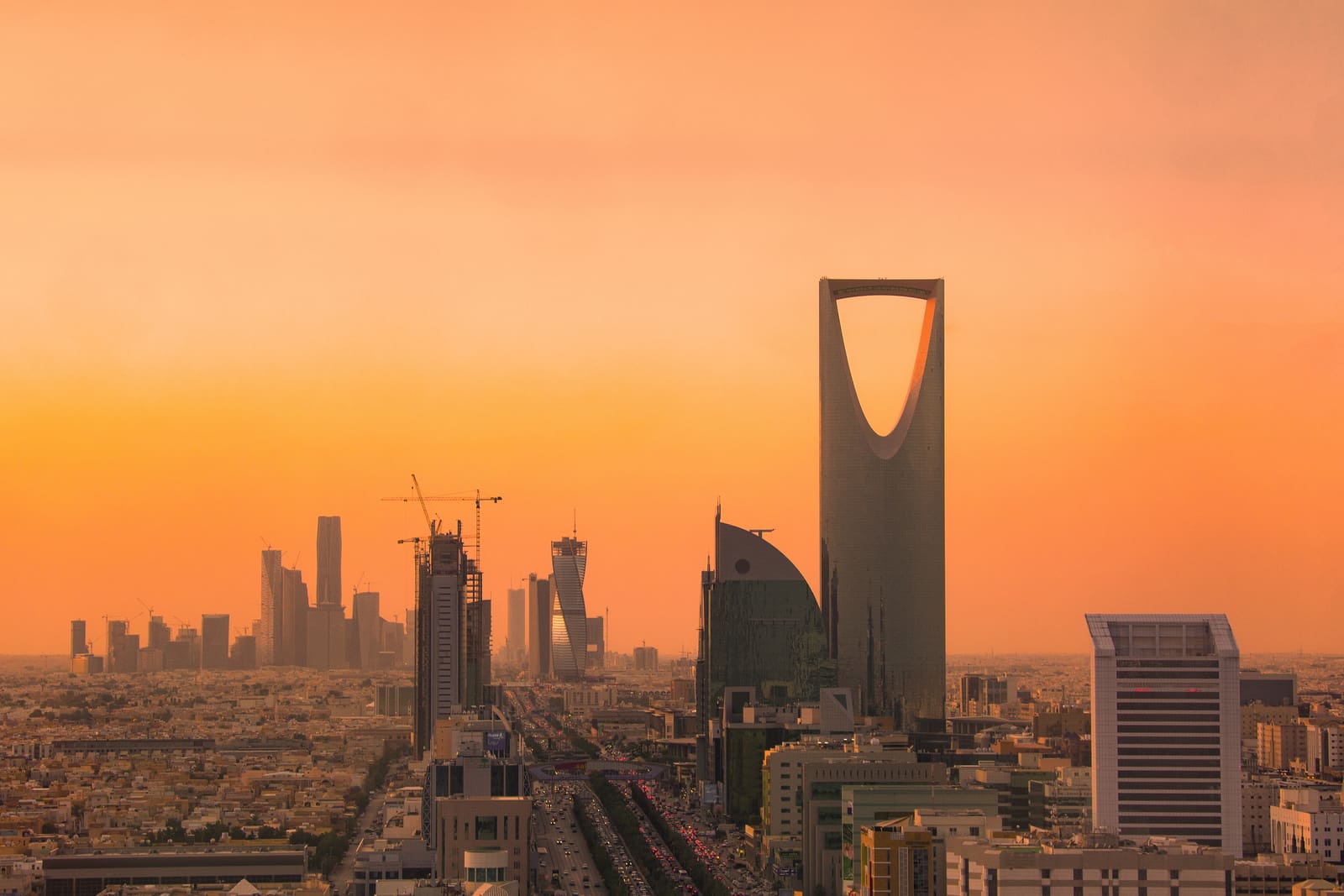
Saudi Arabia only introduced foreign freehold ownership in 2026. Purchases are currently limited to designated investment zones and follow a regulated registration process managed by REGA. The market is still in its early stages, with initial activity concentrated in cities such as Riyadh and the Red Sea.
In simple terms, Dubai offers a more established market, while Saudi Arabia is a newer opportunity that is only beginning to open to international buyers.
Dubai vs Saudi Arabia at a glance
| Metric |

Dubai
|
Saudi Arabia
|
|---|---|---|
| Foreign ownership since | 200224 years of track record | Jan 2026Royal Decree M/14 (issued Jul 2025, entered force 21 Jan 2026) |
| Average price/sqm | ~$2,200–5,400Budget to prime; ultra-prime above $10K | ~$1,500–1,650Riyadh mainstream residential |
| Gross rental yield | 6–8%Mid-market communities up to ~8.5% | 7–9%National avg ~7%; Riyadh up to ~9% |
| Transfer / purchase fee | 4% DLD feePaid to Dubai Land Department | 5% RETTReal Estate Transaction Tax via ZATCA |
| Total purchase costs | ~6–8%DLD fee + agent + admin | ~10%RETT + agent + permit fees |
| Resale fee | None | 5% disposal feeApplied on transfer/resale |
| Annual property tax | None | None |
| Rental income tax | None | None |
| Residency threshold | AED 2M (~$545K)Golden Visa, up to 10 years | SAR 4M (~$1.07M)Iqama via Ministry of Interior |
| Secondary market | Deep, liquidLarge ready-property transaction volume | Still developingForeign resale framework new |
| Off-plan availability | Extensive~70% of Q1 2026 transactions | Limited for foreignersExpanding as zones are confirmed |
| Regulatory body | RERA / DLD | REGA |
The income picture
Rental yields in Dubai and Saudi Arabia are broadly similar, although they are driven by different market conditions.
In Dubai, apartment yields typically range from 6% to 8%. Mid-market communities often achieve higher returns, while prime areas tend to generate lower yields because property prices are higher.
In Saudi Arabia, residential yields generally range from 7% to 9%. Higher yields are supported by lower property prices and strong rental demand in major cities, particularly Riyadh. Neither country taxes residential rental income, so investor returns depend mainly on rental rates, purchase prices, and ongoing ownership costs. As Saudi Arabia's property market matures and prices increase, yields are expected to gradually move closer to regional averages.
Riyadh currently has a rent freeze in place for both residential and commercial properties until September 2030. Under the policy, landlords cannot increase rent above the level recorded on 25 September 2025. The rule applies to both existing leases and new tenancy agreements.
The only exception is a property being rented for the first time. In that case, the landlord can set the initial rent freely. Once agreed, however, that rent is also fixed for five years. The rent freeze applies only to Riyadh and does not affect other cities in Saudi Arabia.
How foreign ownership works in Saudi Arabia
If you have experience buying property in Dubai, the concept in Saudi Arabia will feel familiar. Ownership is still freehold, meaning the unit is fully owned and registered with a government authority. The key differences are the locations available to foreign buyers and the steps required to complete a purchase.
Foreigners can buy freehold property in specific zones approved by REGA. These currently include selected areas in Riyadh, the Red Sea destination, parts of the Eastern Province, and Jeddah, although the exact zones are still being finalised.
Before completing a purchase, buyers must obtain a Real Estate Ownership Permit. Makkah and Madinah remain restricted for non-Muslim individual buyers.
REGA is the main regulatory body for the sector, overseeing licensing, transactions, and overall compliance in the market.
What property ownership can unlock
Both Dubai and Saudi Arabia offer residency options linked to property investment, but the rules and requirements are different.
- Fully online application, no local sponsor required
- Live in the UAE, sponsor family members
- Open bank accounts and obtain a UAE driving licence
- Applies across a wide range of communities and price points
- Applied through the Ministry of Interior
- Right to reside in Saudi Arabia
- Easier management of local accounts and property
- Suited to buyers already investing or operating in the Kingdom
Dubai offers a more straightforward and accessible residency route through property, while Saudi Arabia's framework is more restricted and focused on premium investment areas.
How easy is it to sell?
Dubai has a highly active resale market, supported by consistent transaction volumes and a large base of both local and international buyers. This makes it relatively straightforward to sell across most property segments, with steady liquidity in many areas.
In Saudi Arabia, the secondary market for foreign-owned property is still in its early stages following the 2026 opening. Resale activity is gradually developing as more transactions take place within designated investment zones, and liquidity is expected to increase over time as the market matures.
At present, a 5% disposal fee applies on resale transactions in Saudi Arabia, which is part of the current exit cost structure.
Which market suits which buyer
Dubai provides a long-established rental market with stable occupancy across most residential areas. Saudi Arabia, especially Riyadh, is experiencing strong rental demand driven by population growth and ongoing development, which supports current yield levels.
Saudi Arabia is still in the early phase of opening to foreign investment. Prices are still forming in many areas, supported by large-scale infrastructure projects and long-term development under Vision 2030. This creates potential for capital appreciation as the market matures.
Dubai is supported by international demand, with a global base of tenants and buyers. Saudi Arabia is mainly driven by domestic demand, long-term population growth, and state-led development. Together, they offer exposure to different economic drivers within the region.
Dubai offers a wide range of urban living options, including city apartments, waterfront homes, and villa communities. In Saudi Arabia, lifestyle-focused foreign ownership is currently centred around the Red Sea destination, with resort-style communities and coastal developments.
Both markets offer residency pathways linked to property ownership. Dubai's Golden Visa is a well-established and streamlined process. Saudi Arabia's residency route is newer and generally tied to higher-value investments in designated zones.
Frequently Asked Questions
Common questions from investors comparing Dubai and Saudi Arabia.
Is Saudi Arabia open to foreign property buyers now?
Yes. Foreign freehold ownership was introduced under Royal Decree M/14, issued in July 2025 and effective from 21 January 2026. Foreign buyers can purchase property in designated investment zones approved by REGA. A Real Estate Ownership Permit is required before completing any transaction.
How different is buying property in Saudi Arabia compared to Dubai?
The ownership structure is similar in both markets, as both offer freehold title registered with a government authority. The main differences are in process and market maturity. Dubai has a long-established system with high transaction volumes and clear procedures. Saudi Arabia is still building its transaction ecosystem following its recent market opening.
Which market is easier for first-time international buyers?
Dubai is generally easier. It has a more established legal framework, standardised processes, and a mature resale market. Saudi Arabia involves additional steps, including ownership permits and a newer regulatory structure.
Are property prices in Saudi Arabia lower than in Dubai?
In many cases, yes. Entry prices are generally lower in Saudi Arabia compared to Dubai. However, pricing varies by location, with premium areas in Riyadh and the Red Sea positioned at higher levels.
Can I sell property easily in both markets?
Dubai has a highly active resale market with consistent demand across most segments. Saudi Arabia's resale market is still developing as more foreign transactions take place within approved zones, and liquidity is expected to improve over time.
Which market is better for long-term holding?
Both can support long-term strategies, but in different ways. Dubai offers stability through an established rental and resale market. Saudi Arabia offers earlier-stage growth potential, with outcomes closely linked to ongoing development and market expansion.
Do both countries allow full ownership for foreigners?
Yes, but under different frameworks. Dubai has offered freehold ownership in designated areas since 2002. Saudi Arabia allows freehold ownership in approved investment zones under Royal Decree M/14, effective from January 2026.