
Egypt's residential market reached $22 billion in 2024. The Egyptian pound lost around 70% of its value against the dollar between 2022 and 2024, making property more affordable for buyers using USD or AED. Interest from Gulf investors has grown — 94% of high-net-worth GCC investors have shown interest in Egyptian property, and Abu Dhabi's $35 billion Ras El-Hekma deal brought major capital into the market.
EGP or USD — the currency decision
The Egyptian pound's depreciation is a key reason investors look at this market. For example, an apartment in New Cairo priced at EGP 61,550 per sqm is roughly $1,230 per sqm for a buyer using USD. Prices have increased in local currency, but for foreign buyers, entry levels are still relatively low.
In most cases, everything is tied to the Egyptian pound — property value, rental income, and resale price. If the pound strengthens, returns in USD improve. If it weakens further, returns decrease. This is the main currency factor buyers take on outside of El Gouna.
Foreign buyers usually transfer funds in foreign currency through state-owned banks like Banque Misr or the National Bank of Egypt. The bank converts the money into EGP and records the transaction, allowing funds to be repatriated later when the property is sold.
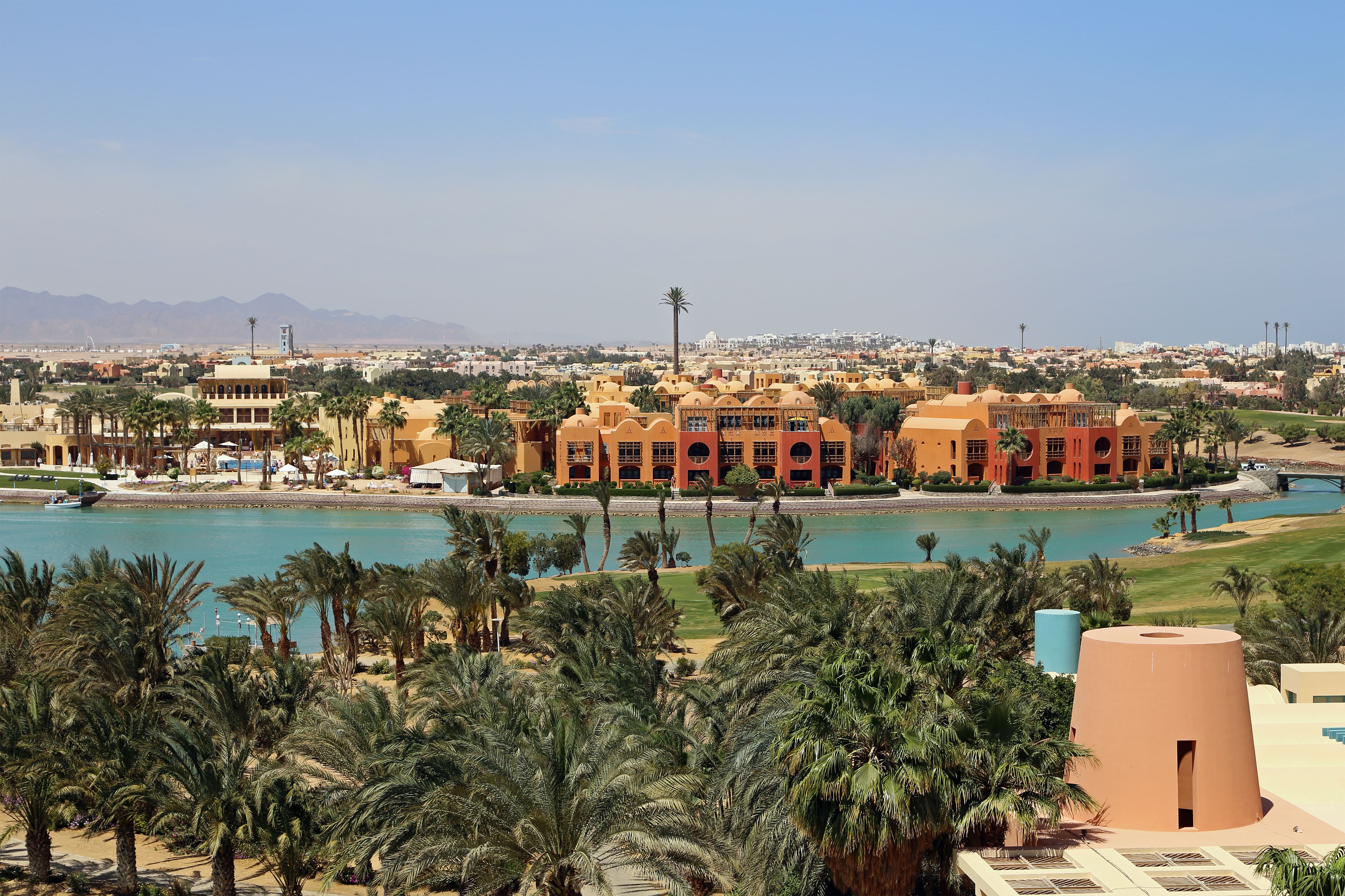
El Gouna is the only market where property is fully priced and transacted in US dollars. There's no exposure to the Egyptian pound — entry price, rental income, and resale are all in USD. Average returns are around 10–12% annually in USD terms.
Foreign ownership is regulated by Law No. 230 of 1996, which allows foreigners to own up to two residential properties. However, most international buyers purchase off-plan in areas like New Cairo, the New Administrative Capital, and North Coast developments, where this limit is less restrictive in practice. A legal review of the developer contract before signing is standard.
The instalment plan
Most properties in Egypt are sold off-plan using developer payment plans. Buyers usually pay 5–10% upfront, while the rest is paid in instalments over 7–10 years as construction progresses.
For example, a $200,000 property may require around $20,000 upfront, with the remaining $180,000 paid over time. Developers generally include financing costs in the property price instead of charging separate interest, which is common across the market.
Properties are usually purchased through developer contracts. These are legally valid, but they provide less protection than a Green Contract — an official notarised title deed registered with Egypt's Real Estate Publicity Department. Buyers should check whether a Green Contract will be issued after handover and have the agreement reviewed by a local lawyer before signing.
Six markets, six strategies
Egypt's main markets differ in currency, rental demand, and investment focus, with New Cairo leading in rental income, El Gouna operating in USD, the New Administrative Capital focused on long-term growth, the North Coast and Ain Sokhna driven by seasonal demand, and 6th of October offering a more affordable entry point.
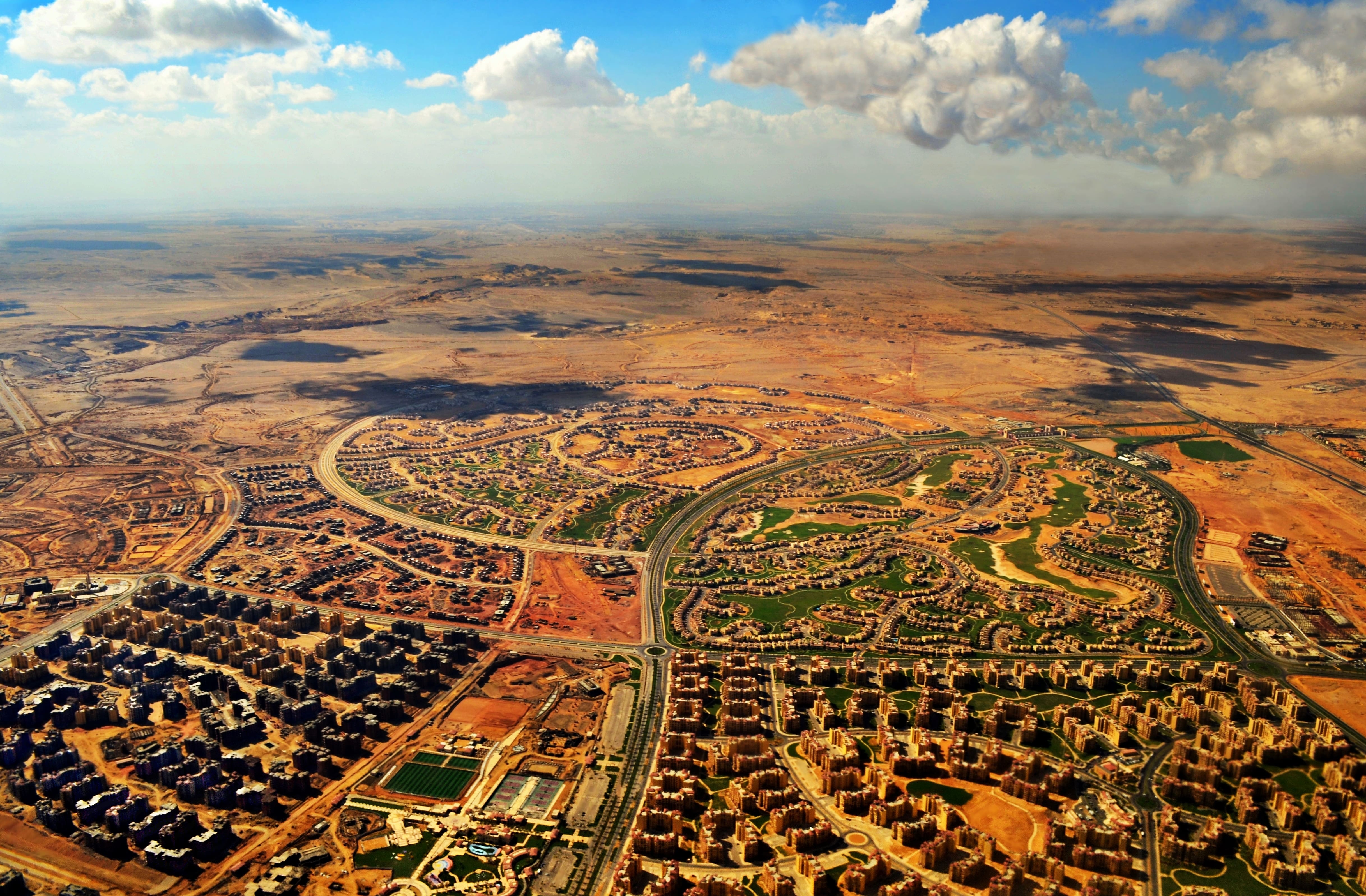
New Cairo
Year-round income market · EGP-basedNew Cairo has the strongest year-round rental demand in Egypt, supported by professionals, government employees, students, and expats. The Fifth Settlement is the main investment area. Unlike coastal destinations, demand remains consistent throughout the year.
Studios and one-bedroom apartments in high-demand areas can generate gross rental yields above 10%, while average returns across New Cairo are generally between 7–10%. The area also has one of the country's most active resale markets, making it easier for investors to sell compared to many other locations in Egypt.
The table below compares all six markets by strategy, returns, currency, and time horizon.
| Market | Strategy | Yield / return | Currency | Time horizon |
|---|---|---|---|---|
| New Cairo | Year-round rental income, active resale market | 7–10% (10%+ in top areas) | EGP | Medium to long |
| El Gouna | USD income, no currency exposure | 10–12% ROI | USD only | Medium to long |
| New Admin. Capital | Capital growth, government-backed | Low now, 30–50% projected | EGP | 7–15 years |
| North Coast | Lifestyle, summer season | 2–5% (seasonal) | EGP | Long-term appreciation |
| Ain Sokhna | Weekend and short-break market | 3–6% | EGP | Medium |
| 6th of October / Sheikh Zayed | Most affordable Cairo entry | 6–8% | EGP | Medium to long |
Choosing a developer
Egypt does not have a central escrow system like Dubai's DLD. Buyer protection mainly depends on the developer contract and oversight from NUCA (New Urban Communities Authority) in new city developments, which makes the choice of developer especially important.
Some developers are backed by major Gulf investors. Emaar Misr is part of Emaar Properties and follows standards similar to its UAE projects. SODIC is majority-owned by Aldar Properties and ADQ, the Abu Dhabi investment platform behind projects such as Yas Island and Saadiyat Island. Modon Holding is backed by L'IMAD, one of Abu Dhabi's sovereign investment platforms, and is leading the $35 billion Ras El-Hekma development on Egypt's North Coast.
Several Egyptian developers are also publicly listed on the Egyptian Exchange and publish quarterly financial reports, giving buyers more visibility into their financial position compared to private developers.
Delays of 12–24 months beyond the original handover date are relatively common in Egypt's off-plan market, including with listed developers. These delays are usually linked to construction costs and supply chain pressures, so they should be factored into planning timelines when investing.
Taxes and ownership costs
Total transaction costs in Egypt are usually around 4–8% of the property price. These costs typically include registration fees, stamp duty, legal fees, and agent commission. In most new developments, the developer covers the agent commission, so buyers usually do not pay it separately.
Key ownership and investment costs include:
- 0–27.5% — rental income tax, charged progressively on 50% of gross rental income, as the other 50% is automatically treated as deductible expenses under Egyptian tax law
- 2.5% — capital gains tax on the property's sale value
- 2–3% — property registration fee
- Around 2.5% — stamp duty based on the transaction value
- 10% of assessed annual rental value — annual property tax, after a 30% expense deduction. Properties with an assessed rental value below EGP 24,000 per year are exempt. In practice, this usually equals around 0.1–0.5% of the property's market value annually
- $600–1,200 per year — typical maintenance costs for a 40–50 sqm apartment
Egypt and Dubai compared
The table below covers the main structural differences between the two markets.
Residency by property investment
Egypt offers property-linked residency from a $50,000 real estate investment, making it one of the lowest entry thresholds in the region. All residency tiers can be renewed indefinitely as long as the investment is maintained.
Buyers can combine the value of two properties to meet the minimum requirement, although foreign ownership is limited to two properties under Egyptian law. There is also no minimum stay requirement to keep the residency permit active.
The programme only provides residency rights and does not lead to permanent residency or citizenship. Egypt's citizenship-by-investment programme operates separately under Law 190/2019.
- Can be met via registered property
- Up to two properties can be combined
- Covers spouse and dependent children
- Up to two properties can be combined
- Covers spouse and dependent children
- Up to two properties can be combined
- Egyptian citizenship and passport
- $10,000 state fee; property commitment of 5 years
Frequently Asked Questions
Common questions from international buyers considering Egypt.
Is the 0% interest payment plan genuinely interest-free?
Yes. Developers allow buyers to spread payments over 7–10 years without adding any financing interest. The cost is already included in the property price, and this structure is standard across most projects, not a limited promotion.
What is a Green Contract in Egypt?
A Green Contract is a notarised title deed registered with Egypt's Real Estate Publicity Department and represents the strongest form of ownership. Most off-plan properties are bought through developer contracts, which are legally valid but offer less protection. Buyers should check whether a Green Contract will be issued at handover.
Do I need to be present in Egypt to buy property?
No. You can buy property in Egypt without being physically present. Most purchases can be completed remotely using a power of attorney, and payments can be made from abroad. However, visiting in person is recommended, especially for early-stage off-plan projects.
What happens to rental income if the Egyptian pound falls?
If the pound weakens, rental income converted into USD or AED will be worth less. This applies to all EGP-based markets. El Gouna is the exception, as both rents and sale prices are in USD.
How does buying in Egypt differ from buying in Dubai?
Buying property in Egypt differs from Dubai mainly in currency, buyer protection, and payment structure. Dubai uses a dollar-pegged currency and protects off-plan buyers through escrow accounts. In Egypt, most transactions are in EGP and rely more on the developer's reliability rather than a central escrow system.
Payment plans in Egypt are also longer, usually 7–10 years, compared to Dubai's typical 3–5 years.
Can I combine multiple properties to qualify for Egyptian residency?
Yes. You can combine up to two residential properties to meet the requirement under Egyptian law (Law 230/1996), since foreigners are limited to owning two properties. For example, two units can be combined to reach the investment thresholds for residency: $50,000 (1 year), $100,000 (3 years), or $200,000 (5 years).