
Jeddah, Saudi Arabia
Saudi Arabia's main Red Sea city — a UNESCO-listed historic core, a Corniche waterfront, and a $20B giga-project under construction.
Projects in Jeddah
About Jeddah
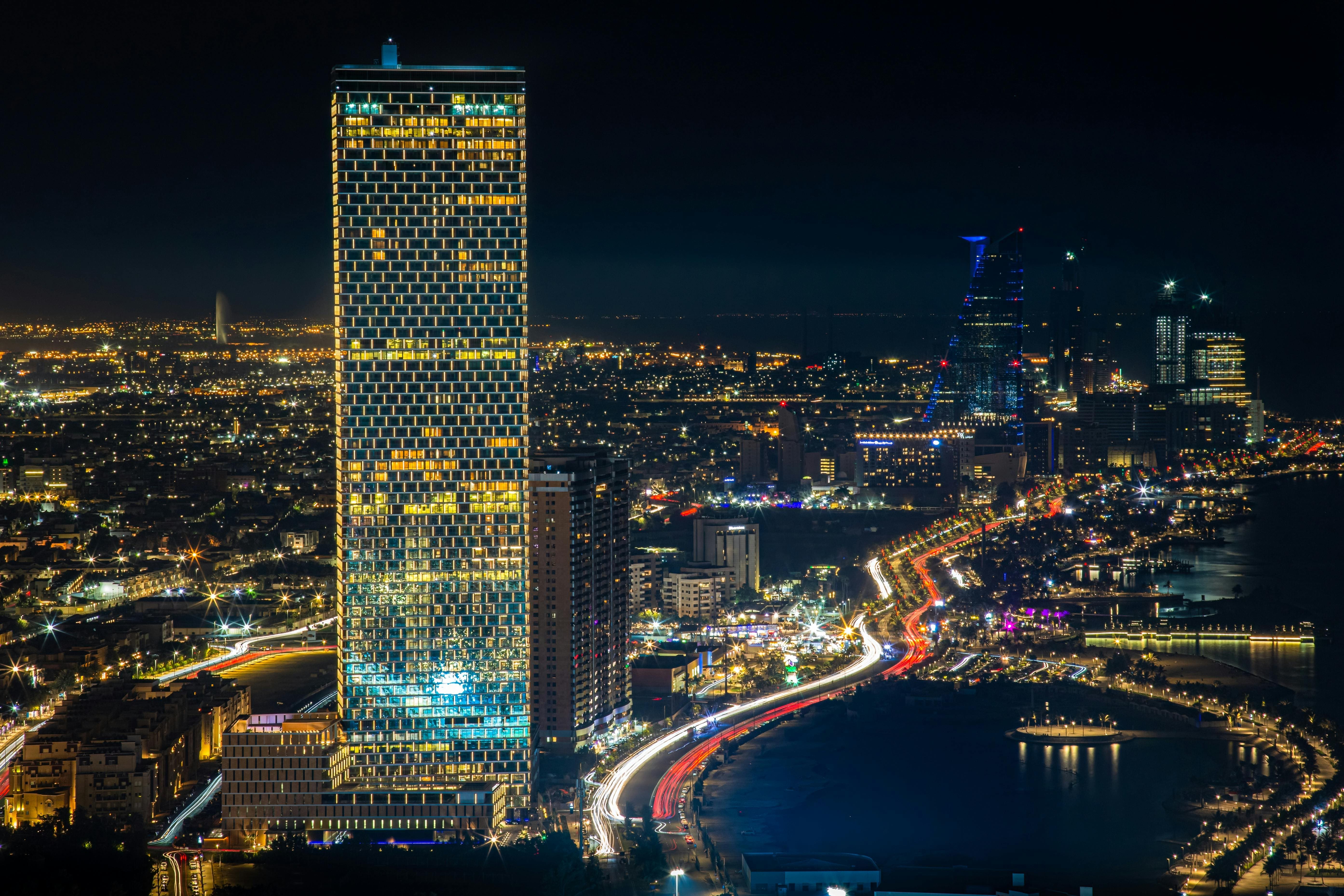
Jeddah is Saudi Arabia’s second-largest city and its main commercial port, located on the Red Sea. It has a population of around 4.7 million, with roughly 40% expatriates. Historically, it served as the main gateway for Hajj pilgrims and a key trading link between the Indian Ocean routes and Mecca. This shaped its cosmopolitan character, and today it remains the most internationally oriented of Saudi Arabia’s major cities with a long-established foreign community.
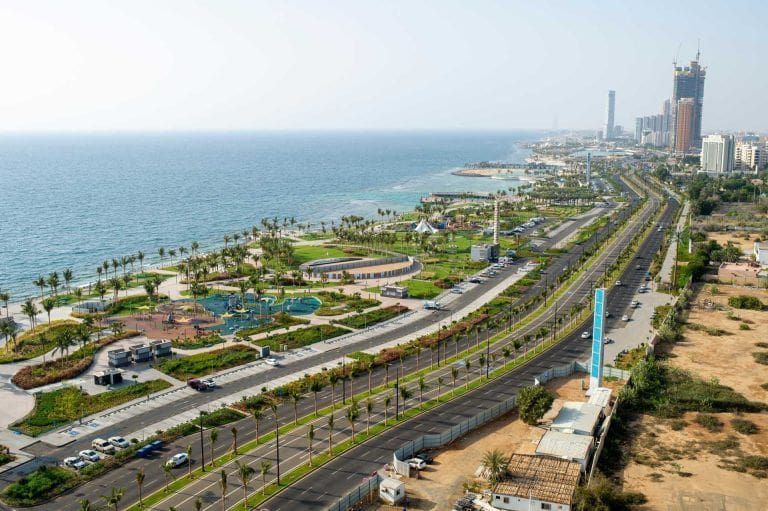
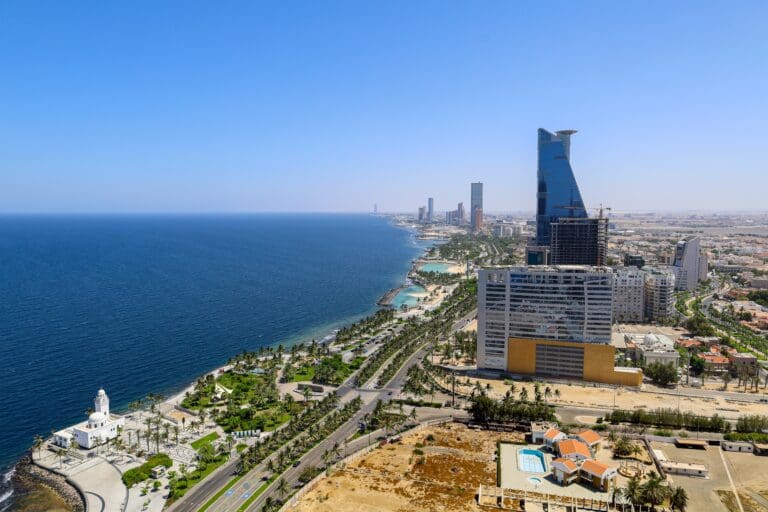
The city stretches along 30 km of coastline, forming the Jeddah Corniche, one of the region’s best-known waterfront promenades. Its historic centre, Al Balad, is a UNESCO World Heritage Site undergoing major restoration supported by the Public Investment Fund. Jeddah is also developing Jeddah Central, a $20B waterfront project covering 5.7 km² in the city centre, with Phase 1 planned for completion by the end of 2027.
The city is a major transport and tourism hub. King Abdulaziz International Airport handled a record 53.4 million passengers in 2025, while Jeddah welcomed 32 million tourists in Summer 2025, up 26% year on year. Its role as the entry point for year-round Umrah pilgrims creates consistent demand that supports the short-term rental market.
Property Prices in Jeddah
Jeddah’s residential market has recorded steady price growth, supported by a 25% year-on-year rise in transaction volumes in 2025. Pricing varies significantly by location: Corniche-facing areas sit at the top end of the market, while North Jeddah offers more accessible off-plan entry points.
| Property type | Avg. price / sqm (SAR) | Avg. price / sqm (USD) | YoY change |
| Apartments (citywide) | SAR 4,385 | ~USD 1,169 | +1.2% |
| Villas (citywide) | SAR 5,185 | ~USD 1,383 | +3.2% |
| Prime waterfront (Al Shati / Al Hamra) | SAR 8,000–14,000 | ~USD 2,133–3,733 | — |
| North Jeddah / Obhur (off-plan) | SAR 4,000–5,000 | ~USD 1,067–1,333 | — |
Citywide averages from Cavendish Maxwell KSA Residential Market 2025. Waterfront and Obhur ranges from market data; actual prices vary by building, floor, and specification.
How Jeddah compares to Dubai
| Metric | Jeddah | Dubai (mid-tier) |
| Entry price per sqm (apartments) | ~USD 1,169 | USD 4,000–5,000 |
| Avg. gross rental yield | ~7.89% (Q1 2026) | ~6–7% (2025) |
| Apartment rent growth (YoY) | +2.6% (2025, JLL) | ~8–9% (2025) |
| Sale-to-asking ratio | 97–99% | ~97–100% |
| Personal income tax on rentals | None | None |
| Foreign ownership | Designated zones (2026 law) | Designated freehold zones |
*The price is valid for 2026
Key Districts
Jeddah’s residential market divides into distinct zones — each with a different investor profile, price point, and demand driver.
Buying Property in Jeddah as a Foreign National
Saudi Arabia’s foreign ownership law came into effect on 22 January 2026, allowing non-Saudi nationals to buy property in designated zones across the Kingdom under a regulated framework. Jeddah is one of the key markets under this system. Unlike Makkah and Madinah, where ownership remains restricted to Muslims, Jeddah is open to all nationalities, making it the main coastal entry point for international investors in western Saudi Arabia.
Ownership is permitted only within REGA-designated zones and is registered through the official Saudi Properties platform. In Jeddah, these typically include Al Shati, Al Hamra, Al Rawdah, and Obhur. Each transaction must be verified against REGA’s official zoning maps to confirm eligibility before purchase.
Transaction costs (foreign buyers) — approximately 10% of purchase price — 5% Real Estate Transaction Tax (RETT) plus a 5% REGA disposal fee introduced under the 2026 law
Income tax — none — Saudi Arabia has no personal income tax on rental earnings for individuals
Annual holding tax — none for individual owners
Rental contracts — must be registered through the Ejar platform regardless of owner nationality
Registration — all transactions must be recorded in the Real Estate Registry — unregistered purchases carry no legal protection for foreign buyers
Purchasing a completed residential property valued at SAR 4 million or more (approximately USD 1.07M) qualifies foreign buyers for Saudi Premium Residency under the Real Estate Owner pathway. Residency covers the buyer and their immediate family — spouse, children under 25, and parents — with no local sponsor requirement, full work rights, and unrestricted entry and exit.
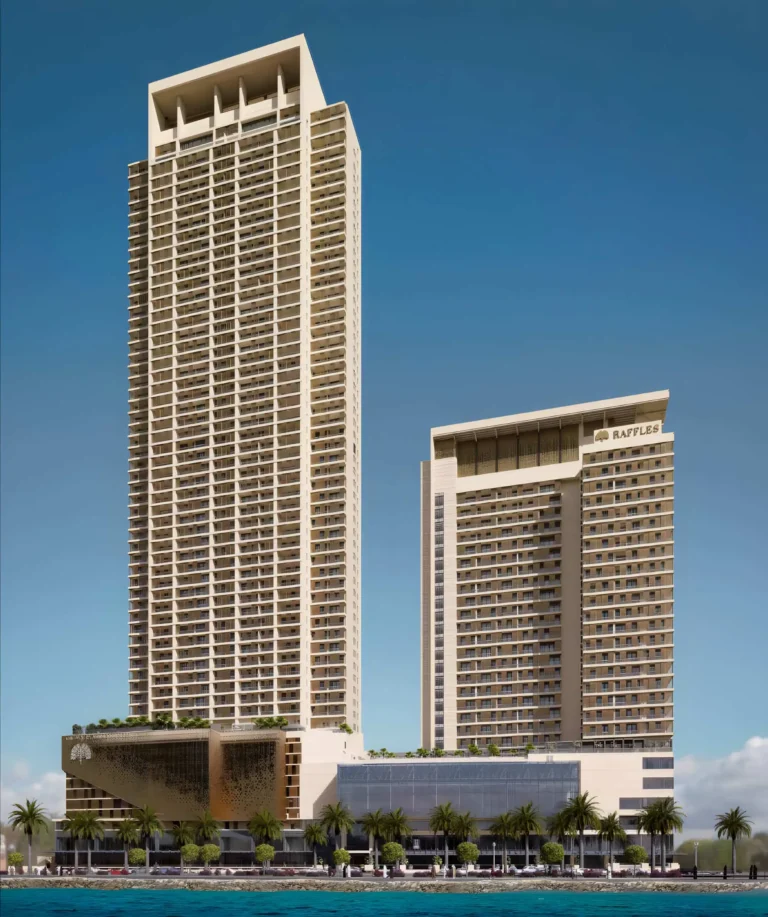
Residency remains valid as long as the property is owned and free from mortgage. Several completed Jeddah Corniche projects exceed this threshold, including Raffles Jeddah Residences (from AED 9.5M) and Golden Tower (from AED 8.3M).
*The price is valid for 2026
Living in Jeddah
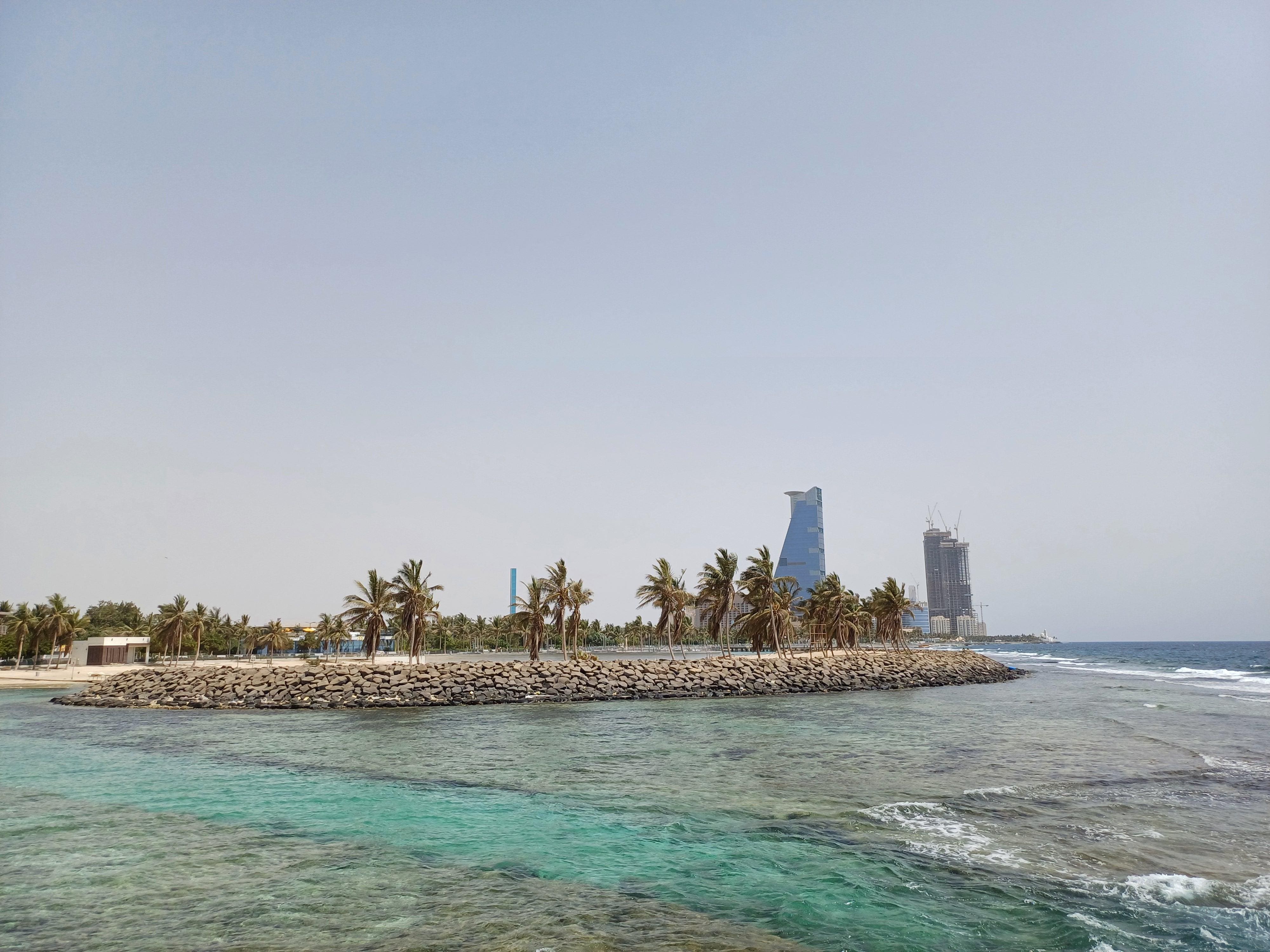
Much of Jeddah’s activity is concentrated along the 30 km Corniche on the Red Sea. Compared to Riyadh, the city has a more coastal rhythm and a stronger use of outdoor and public spaces, along with a more internationally familiar social environment.
Its role as a historic trading and pilgrimage hub is reflected in everyday life, particularly in its dining scene, which ranges from local seafood to a wide selection of international restaurants and cafés. Cultural offerings are also expanding, adding depth to the city’s residential appeal.
Key landmarks are integrated into this coastal setting. Al Rahma Mosque, known as the Floating Mosque, sits directly on the Red Sea along the Corniche, appearing to float above the water at high tide. A short distance away, Al Balad represents the historic core of the city, with preserved coral-stone buildings, narrow streets, artisan markets, and restored heritage structures.
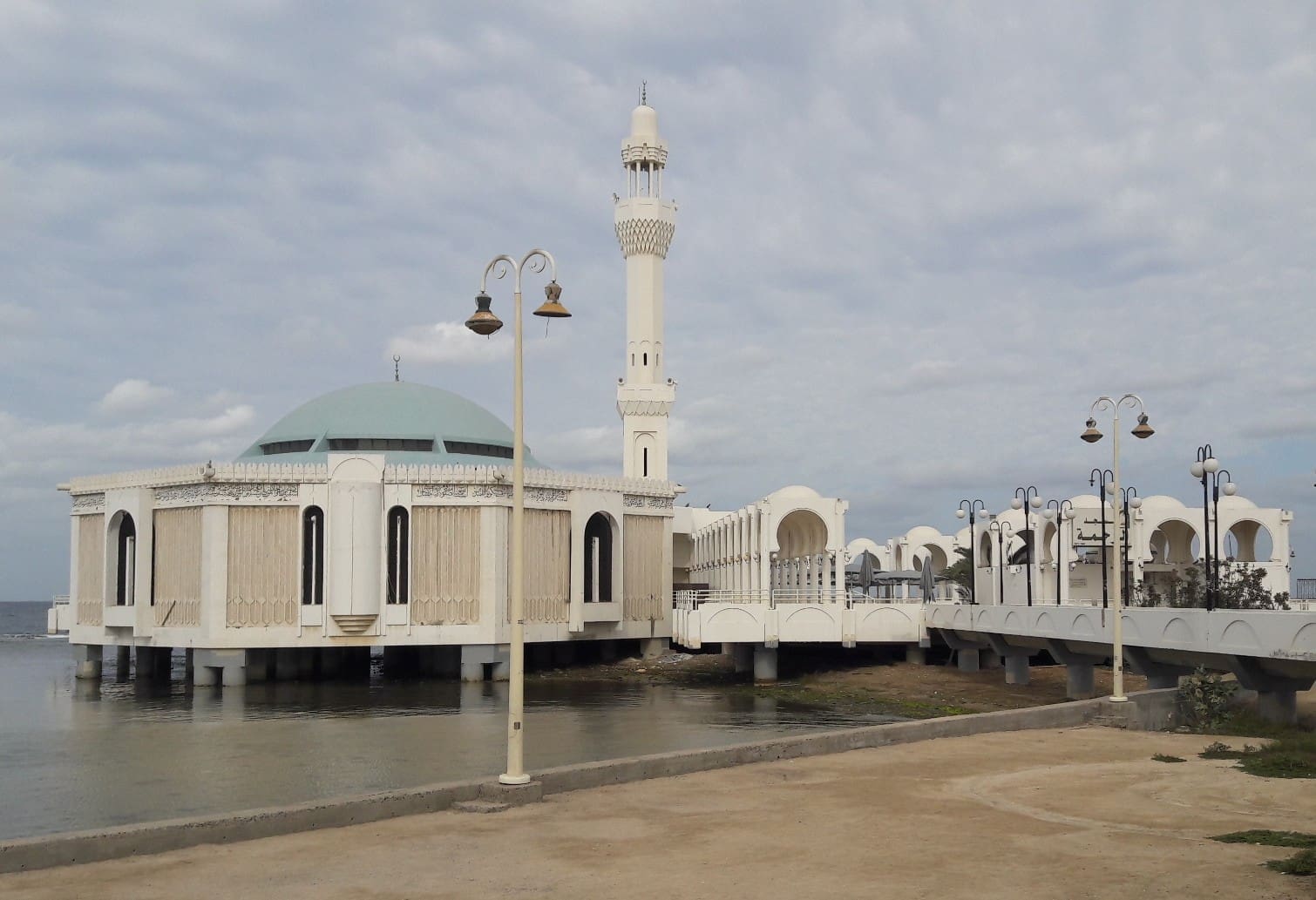
The Corniche — 30 km Red Sea waterfront promenade with parks, cycling tracks, beaches, and restaurants running the full length of the city
King Fahd’s Fountain — the world’s tallest fountain at 312 metres, lit by 500 spotlights every evening on the Al Hamra Corniche
Al Balad — UNESCO-listed historic district with restored coral-stone tower houses, boutique heritage hotels, and cultural venues
Red Sea diving and watersports — direct access to reefs, dive clubs along the Corniche, snorkelling, sailing, and year-round warm water
International schools and healthcare — well-established expat infrastructure, particularly in the northern Corniche corridor
Proximity to Mecca — 80 km by road (approximately 45 minutes by car); also served by the Haramain High-Speed Railway from KAIA, significant for Muslim residents and Umrah visitors
Year-round sunshine — optimal outdoor conditions October through April; the Corniche and beaches are the city’s primary leisure infrastructure
Connectivity
Jeddah is served by King Abdulaziz International Airport (KAIA), the second-busiest airport in Saudi Arabia and the main international gateway to the western region. In 2025, it handled a record 53.4 million passengers. Terminal 1 is directly connected to the Haramain High-Speed Railway station, allowing passengers to access rail services to Jeddah city centre, Mecca, and Medina directly from the airport.
By road, Jeddah is approximately 80 km from Mecca (45 minutes) and around 950 km from Riyadh. The northern Corniche residential districts are roughly 30 km from KAIA — typically 25–35 minutes by car depending on traffic.
Frequently Asked Questions
Yes. Under Saudi Arabia's January 2026 foreign ownership law, non-Saudi nationals can buy residential property in designated REGA zones in Jeddah. The most active areas include Al Shati, Al Hamra, Al Rawdah, and Obhur. All purchases must be registered through the Saudi Properties platform.
Average prices are around SAR 4,385 per sqm for apartments and SAR 5,185 per sqm for villas, according to Cavendish Maxwell's 2025 report. Prime waterfront districts such as Al Shati and Al Hamra range between SAR 8,000 and SAR 14,000 per sqm. Completed branded residences on the Corniche typically start from around AED 8.3M, while off-plan developments begin from around AED 1.76M.
Gross rental yields average around 7.89% as of Q1 2026, above the national average of 6.84%. Prime Corniche areas typically generate 7–8.5%, while mid-market districts such as Al Rawdah can range from 6.5–9.5%. Short-term occupancy is generally between 55% and 70%, supported by Umrah travel, domestic tourism, and growing international demand. Rental income is tax-free for individual owners.
Yes, for completed properties valued at SAR 4 million (around USD 1.07M) or more. The Real Estate Owner pathway grants long-term residency for the buyer and immediate family, with full work rights and no local sponsor requirement. The residency remains valid as long as the property is owned and unencumbered. Several completed projects along the Jeddah Corniche meet this threshold.
Jeddah Central is a SAR 75 billion ($20B) PIF-backed waterfront development covering 5.7 km² in the city centre. It includes a stadium, opera house, oceanarium, marina, 17,000 residential units, and hotel inventory. Phase 1 covers 45% of the site and is scheduled for completion by end of 2027. The project is a major driver of demand and regeneration in the central waterfront area.
No. There is no personal income tax on rental income and no annual property tax for individuals in Saudi Arabia. Transaction costs at purchase are around 10% for foreign buyers, consisting of a 5% Real Estate Transaction Tax (RETT) and a 5% REGA fee introduced under the 2026 framework. Saudi nationals pay only the 5% RETT.
Data sources: Global Property Guide Q1 2026 · Cavendish Maxwell KSA Residential Market Report 2025 · JLL KSA Residential Market Review 2025 · Jeddah Central Development Company · UNESCO World Heritage List — Historic Jeddah · Saudi Real Estate General Authority (REGA). Last reviewed April 2026.
Metropolitan Premium Properties
-
 [email protected]
-
+971 4 428 6151
-
36th-38th Floor, Al Salam Tecom Tower,
Internet City, Dubai, UAE


Get A Free Consultation
Ready for your new home?Leave a Request
Popular Searches in the UAE
Our newsletter
Sign up for our weekly newsletter for market updates!