
On 16 September 2026, Sheikh Hamdan bin Mohammed approved the New Fourth Corridor. The highway will connect Al Shanouf Road in Sharjah with Al Faya Road in Abu Dhabi, passing through Dubai.
The route will stretch for 80 km and become the fourth major inter-emirate road connection alongside Sheikh Zayed Road (E11), Sheikh Mohammed Bin Zayed Road (E311) and Emirates Road (E611). The three existing highways currently carry more than 850,000 vehicles per day. The new highway will have 12 lanes and a capacity of 24,000 vehicles per hour in both directions, with the completed project expected to serve more than 3.1 million people.
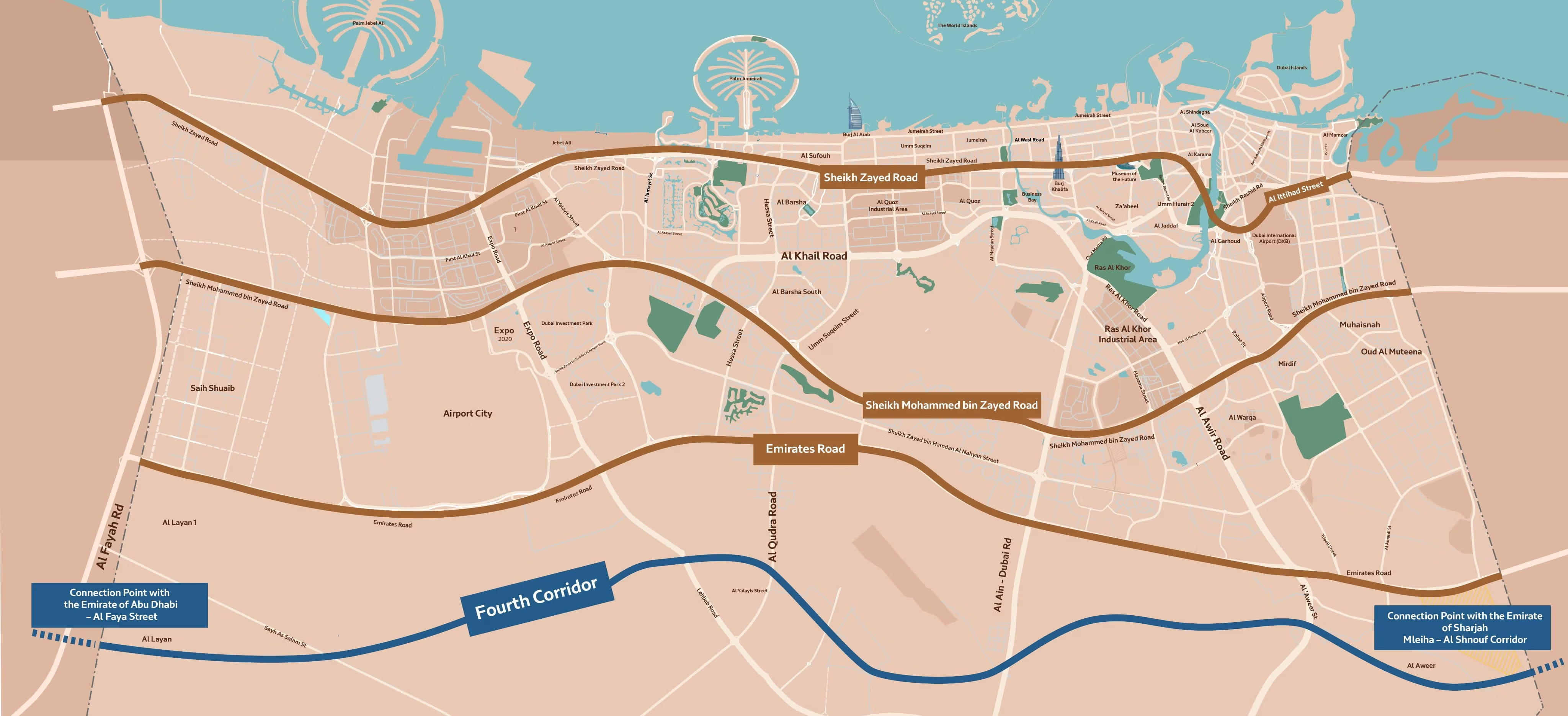
Phase 1, valued at AED 3.5 billion, will cover around 30 km between Al Shanouf Road and Dubai–Al Ain Road and is expected to reduce travel time by 60%, bringing a 35-minute journey down to around 14 minutes. The phase will serve approximately 600,000 people and will include 55 km of surface roads, 21 km of bridges and ramps, and 2.5 km of tunnels.
Dubai–Al Ain Road will also be widened between Emirates Road and Lehbab Road, while four major junctions will be upgraded as part of the works.
Phase 2 will cover the remaining 50 km to Al Faya Road in Abu Dhabi and is expected to reduce travel time by 52%, bringing a 50-minute journey down to around 24 minutes. Once both phases are complete, the corridor will include 72 bridges, 17 tunnels and 45 stormwater drainage culverts.
The route will pass Al Maktoum International Airport, the Al Marmoom Desert Conservation Reserve and the Al Wohoosh Desert Conservation Reserve, and will run alongside the Etihad Rail line. It is also expected to improve road access to residential and development areas in southern Dubai, particularly Dubai South and Emaar South, which are located within the wider growth area surrounding Al Maktoum International Airport.
The corridor is intended to move through traffic, particularly trucks, away from built-up areas and reduce congestion on the three existing inter-emirate highways. It will add capacity to the network while keeping E11, E311 and E611 in operation.